

The Fruit That Proves the Connection — And Why Joy Shows Up Earlier Than You'd Think
Most of us assume spiritual fruit means good behavior. Jesus starts the list with joy, and He says it on the night before His crucifixion. What John 15:7-11 reveals about what real fruit looks like — and why it can't be manufactured by a disconnected branch.
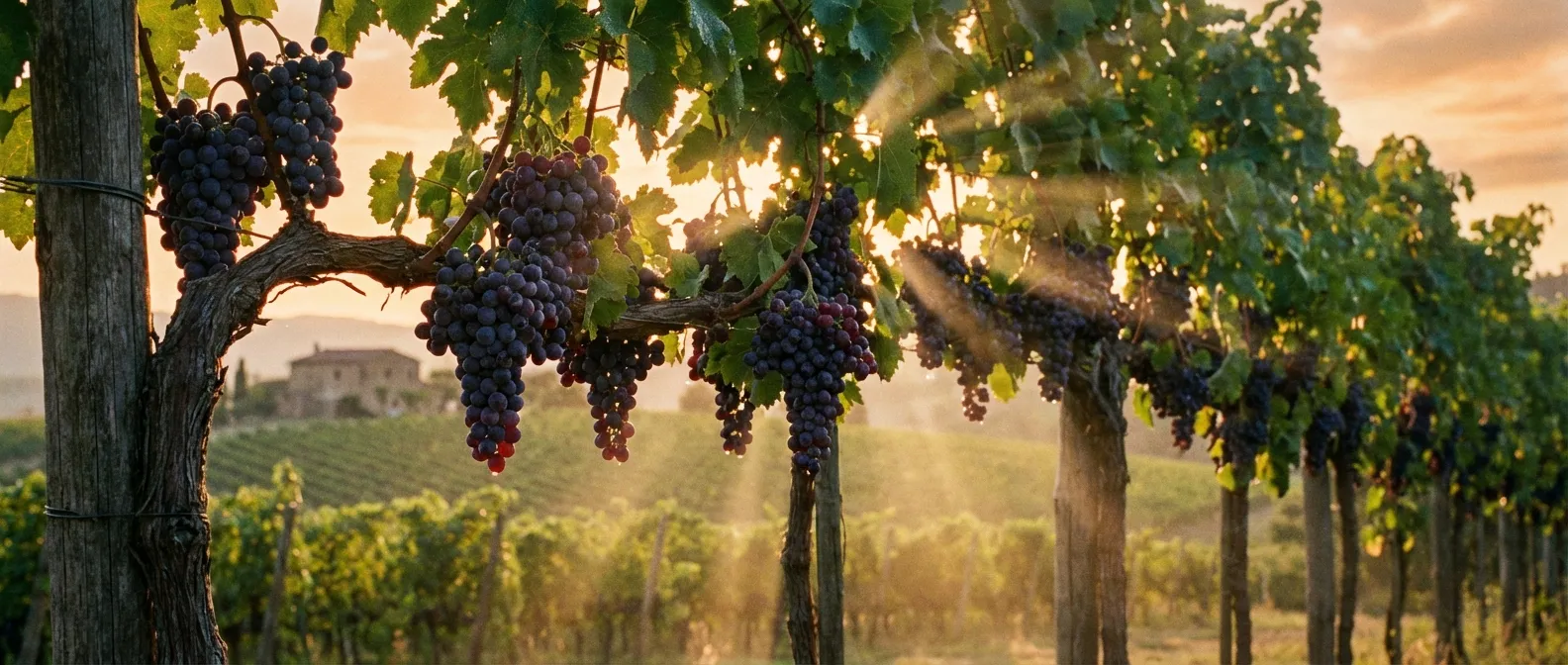
Part 4: The Fruit That Proves the Connection
Pop quiz.
When you hear the phrase “bearing fruit” in a Christian context, what comes to mind?
If you’re like most people, your brain goes straight to a checklist: Reading your Bible. Going to church. Being kind to difficult people. Not swearing. Tithing. Volunteering. The spiritual equivalent of eating your vegetables — things that are good for you but don’t exactly make your heart sing.
And if that’s your picture of spiritual fruit, I have news: Jesus painted a completely different one.
Because in John 15:7-11, when He finally describes what fruit looks like for a branch that remains in the vine, He doesn’t start with behavior. He doesn’t start with service. He doesn’t start with moral performance.
He starts with prayer. And He ends with joy.
The Blank Check With a Condition
If you remain in me, and my words remain in you, you will ask whatever you desire, and it will be done for you.
Read that promise out loud. “Ask whatever you desire, and it will be done for you.”
That sounds like a blank check. It sounds too good to be true. And honestly, if you rip it out of context, it is too good to be true — which is exactly what prosperity preachers do with it, turning it into a divine vending machine where you insert enough faith and out pops whatever you want.
But look at the condition. It’s right there in the first half: “If you remain in me, and my words remain in you.”
This isn’t a blank check for anyone with a prayer list. This is a promise for branches that are so connected to the vine that their desires have been shaped by the vine’s life flowing through them.
Think about what happens when you truly remain in someone. When you spend enough time with a person, you start wanting what they want. Your priorities shift. Your appetites change. The things that used to seem urgent fade, and the things that matter to them start mattering to you.
That’s what Jesus is describing. When you remain in Him — when His words have so thoroughly saturated your thinking that they’ve reshaped your desires — then “whatever you ask” is no longer a dangerous promise. Because you’re no longer asking for selfish things. You’re asking for vine-things. Fruit-things. Kingdom-things.
And those requests? They get answered. Every time. Because you’re asking for exactly what the gardener was planning to produce in the first place.
What Glorifies the Father
“In this my Father is glorified, that you bear much fruit; and so you will be my disciples.…”
Here’s a statement that would’ve rearranged the disciples’ mental furniture: What glorifies the Father isn’t sacrifice. It isn’t perfect attendance. It isn’t suffering for its own sake. What glorifies the Father is fruit.
Much fruit. Abundant fruit. The kind that spills over the edges.
And notice the second half: “so you will be my disciples.” Jesus doesn’t say fruit proves you’re His disciple (though it does). He says bearing fruit is how you become His disciple in a deepening, ongoing way. Discipleship isn’t a status you achieved at conversion. It’s a relationship that deepens as the fruit grows.
The gardener in John 15:1 isn’t glorified by a vineyard of impressive-looking branches with big leaves and no grapes. He’s glorified by fruit. By the thing the vine was designed to produce. By the evidence that life is flowing, that the connection is real, that the branch didn’t just look attached — it was attached.
By their fruits you will know them. Do you gather grapes from thorns or figs from thistles? Even so, every good tree produces good fruit, but the corrupt tree produces evil fruit. A good tree can’t produce evil fruit, neither can a corrupt tree produce good fruit. Every tree that doesn’t grow good fruit is cut down and thrown into the fire. Therefore by their fruits you will know them.
Jesus said this earlier in His ministry, and now in John 15, He’s explaining the mechanism. You know a tree by its fruit. And the fruit comes from remaining in the vine. Not from trying harder. Not from performing better. From staying connected.
The Fruit List and the Detail Hiding in the Greek
When Christians talk about spiritual fruit, they almost always go to Galatians 5:
But the fruit of the Spirit is love, joy, peace, patience, kindness, goodness, faith, gentleness, and self-control. Against such things there is no law.
Love, joy, peace, patience, kindness, goodness, faithfulness, gentleness, self-control.
Here’s what most people miss: these aren’t nine separate things. They’re one thing expressed nine ways. Paul says “the fruit” (singular) of the Spirit is — and then lists nine characteristics. It’s not a fruit salad. It’s a single fruit with nine flavors.
And every single one of them is relational. Not one item on that list is something you can demonstrate in isolation. Love requires someone to love. Patience requires someone to be patient with. Kindness, gentleness, self-control — these are all things that show up between people.
Spiritual fruit isn’t your private spiritual achievement. It’s the visible, tangible evidence that the vine’s life is flowing through you into the world around you.
You can’t manufacture it. You can white-knuckle patience for about three days. You can perform kindness until you’re exhausted. You can fake joy until the mask cracks. But the real thing — the fruit that lasts, that doesn’t run out, that doesn’t depend on circumstances — that only grows in a branch that’s connected to the vine.
For we are his workmanship, created in Christ Jesus for good works, which God prepared before that we would walk in them.
You are God’s workmanship. Created for good works. Created for — not “assigned to.” Not “obligated to.” The fruit is what you were made for. It’s not extra credit. It’s your design.
Why Jesus Chose Joy
Now. Let’s talk about the most unexpected thing in this passage.
Even as the Father has loved me, I also have loved you. Remain in my love. If you keep my commandments, you will remain in my love, even as I have kept my Father’s commandments and remain in his love. I have spoken these things to you, that my joy may remain in you, and that your joy may be made full.
Jesus is hours from the cross. He knows it. His closest friend has just left to betray Him. The men around this table are about to scatter like startled birds. The darkest night in human history is closing in.
And Jesus talks about joy.
Not just any joy — His joy. The same joy that sustained Him through three years of ministry to people who constantly misunderstood Him. The same joy that existed in Him while knowing the cross was coming. That joy — transferred to them. Made complete in them.
This is not happiness. Happiness is circumstantial. Happiness says “things are going well, so I feel good.” Joy is something else entirely. Joy is the deep, settled confidence that you are connected to the source of life — and that connection cannot be shaken by what happens around you.
Jesus had joy on the way to the cross. Not because the cross was pleasant. Because His connection to the Father was unbroken.
And that — that exact same unshakeable, source-connected, circumstance-independent joy — is what He’s promising to every branch that remains.
Joy as Evidence
Here’s what most people get backwards: they think joy is the reward for producing fruit. Work hard, obey well, produce enough, and eventually joy shows up like a bonus check.
John 15 says the opposite. Joy is the fruit. It’s not what you get after producing. It’s what grows naturally in a branch that’s connected to the vine.
In fact, I’d argue that joy is the first fruit — the canary in the coal mine of spiritual health. When joy is present, the branch is connected. When joy has dried up, something has disconnected. Not necessarily sin. Sometimes it’s exhaustion. Sometimes it’s grief. Sometimes it’s the pruning process itself. But the absence of joy is always worth examining, because it’s the branch’s first signal that something has shifted in its connection to the vine.
Rejoice in the Lord always! Again I will say, “Rejoice!” Let your gentleness be known to all men. The Lord is at hand. In nothing be anxious, but in everything, by prayer and petition with thanksgiving, let your requests be made known to God. And the peace of God, which surpasses all understanding, will guard your hearts and your thoughts in Christ Jesus.
“Rejoice in the Lord always.” Paul wrote this from prison. Prison. Not from a beach vacation. Not after a promotion. From a cell. Chained to a Roman guard.
And he said “rejoice” — not because his circumstances were joyful, but because his connection to the vine was unbroken. The vine was still flowing. The source was still there. And when the source is there, joy is possible in any circumstance.
That’s the kind of fruit John 15 is talking about. Not grit-your-teeth religious happiness. Not the saccharine smile of someone pretending everything’s fine. Deep, honest, source-connected joy that exists alongside pain, not instead of it.
Fruit That Remains
One more detail that’s easy to miss:
You didn’t choose me, but I chose you and appointed you, that you should go and bear fruit, and that your fruit should remain; that whatever you will ask of the Father in my name, he may give it to you.
“I appointed you that you should go and bear fruit, and that your fruit should remain.”
Remain. There’s that word again. Even the fruit is supposed to remain. It’s not seasonal. Not temporary. Not a burst of productivity followed by burnout.
God isn’t interested in flash-in-the-pan Christians who produce spectacular fruit for three months and then flame out. He’s interested in branches that bear consistent, sustainable, lasting fruit — the kind that comes from a branch that never disconnected from the vine.
that you may walk worthily of the Lord, to please him in all respects, bearing fruit in every good work and increasing in the knowledge of God,
“Bearing fruit in every good work.” Not in some good works. Not in the works that are easy or visible or applauded. In every good work. The small ones. The unseen ones. The Tuesday-afternoon ones. The ones nobody posts about.
That kind of consistent, invisible, faithful fruitfulness doesn’t come from willpower. It comes from a root system that’s drawing from a source deeper than your own energy.
The Fruit Audit
So here’s the uncomfortable-but-useful question: Is there fruit?
Not “Am I busy?” Busy isn’t fruit. Not “Am I trying hard?” Effort isn’t fruit. Not “Am I going to church?” Attendance isn’t fruit.
Is there actual love — the kind that costs you something? Is there actual joy — the kind that exists even when things aren’t going well? Is there actual peace — the kind that your anxious mind can’t manufacture on its own?
These are vine questions. And the answers tell you something honest about the connection.
If the fruit is there — even small, even imperfect, even just beginning to bud — the connection is real. The vine is flowing. Keep remaining.
If the fruit has dried up — if love feels forced, joy feels fake, patience is nonexistent, and self-control is a memory — that’s not a reason to panic. It’s a reason to check the connection. Not to try harder. To reconnect.
The branch that reconnects doesn’t have to produce fruit by force. It just has to get back to the vine. The life does the rest.
“His lord said to him, ‘Well done, good and faithful servant. You have been faithful over a few things, I will set you over many things. Enter into the joy of your lord.’…”
“Well done, good and faithful servant.” Not good and spectacular. Not good and impressive. Good and faithful. Faithful means you stayed connected. And the fruit that came from that faithfulness — even if it looked small to the world — was enough to make the gardener smile.
Reflect
-
What does “spiritual fruit” look like in your life right now? Not what you wish it looked like — what’s actually there? Is there love, joy, peace? Where? How?
-
Where is joy present in your life? Where is it noticeably absent? Could the absence be a signal about your connection to the vine rather than about your circumstances?
-
Read John 15:7 again. Jesus promises that remaining reshapes your desires. Have you experienced this — wanting different things as you’ve drawn closer to Christ? How did your prayers change?
-
Are there areas where you’re trying to produce fruit through effort instead of connection? What would it look like to stop striving and start remaining? How do you tell the difference?
-
“Your fruit should remain.” What would lasting, sustainable, non-burnout fruitfulness look like for you specifically? What needs to change for that to be possible?
Coming Up Next
Jesus has told us to remain. He’s warned us about withering. He’s shown us what fruit looks like.
But now, in John 15:12-17, the passage takes a turn nobody sees coming. The vine metaphor fades into the background, and Jesus makes a statement that changes the entire relationship:
“I no longer call you servants. I have called you friends.”
From servants to friends. From obligation to love. This is where John 15 stops being a theology lesson and becomes the most intimate moment in the entire Gospel.
Next: “From Servants to Friends — When Jesus Rewrote the Relationship”