

Devotional Series · 5 Parts
Remain in Me
A 5-Part Devotional on John 15
Jesus used the word “remain” eleven times in one conversation. In the vine and branches passage of John 15, He lays out the operating manual for the entire Christian life — what it means to stay connected, what happens when you don’t, and why the fruit that comes from abiding is unlike anything you can manufacture on your own.
Start the Series

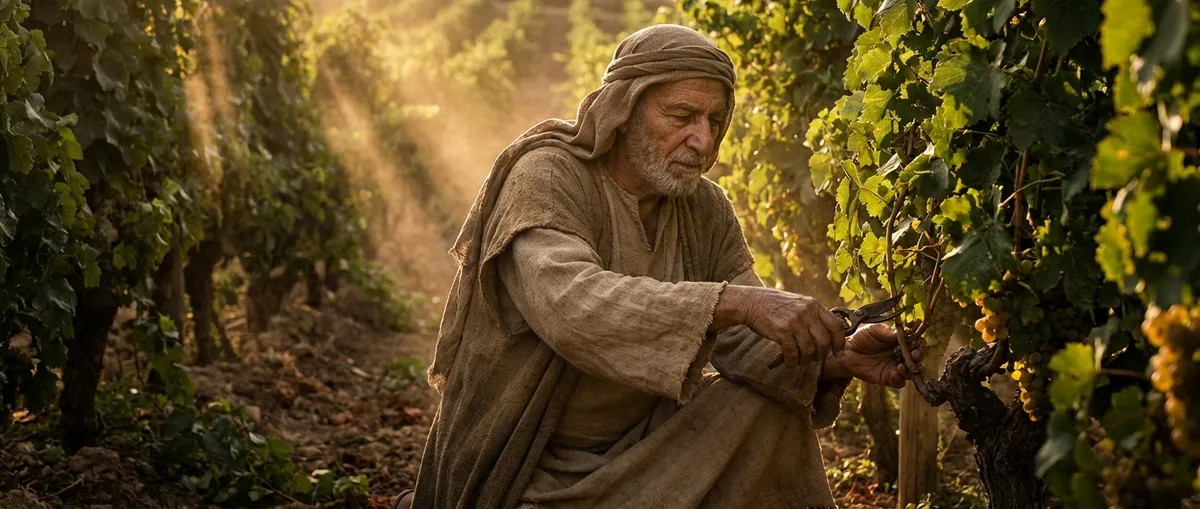
God Isn't a Landlord — He's a Gardener on His Knees in the Dirt
Jesus opens John 15 with a metaphor drawn straight out of Israel's long history with God — but with one word that reframes the whole thing. God isn't managing a vineyard from a distance. He's crouched in the soil, pruning what He loves. What the first three verses of the vine passage reveal about how God actually tends you.

What 'Remain' Actually Means — And Why It's Harder (and Simpler) Than You Think
Jesus uses the word 'remain' eleven times in John 15. It's not a theological concept you study — it's a relational practice you live. What abiding in the vine looks like on a regular Tuesday when God feels distant and your faith feels thin.

The Branch That Withers — The Hardest Verse in John 15 (And Why We Can't Look Away)
John 15:6 is the verse people skip, explain away, or weaponize. A branch that doesn't remain gets thrown into the fire. What does that mean for believers? We sit with the tension — honestly, carefully, and without easy answers.

The Fruit That Proves the Connection — And Why Joy Shows Up Earlier Than You'd Think
Most of us assume spiritual fruit means good behavior. Jesus starts the list with joy, and He says it on the night before His crucifixion. What John 15:7-11 reveals about what real fruit looks like — and why it can't be manufactured by a disconnected branch.

From Servants to Friends — When Jesus Rewrote the Relationship
After verse upon verse of vines, branches, fruit, and fire — Jesus steps out of the metaphor and drops a single sentence that rewrites the whole relationship. 'I no longer call you servants. I have called you friends.' In a culture where the gap between rabbi and disciple was absolute, that was a word worth dying over.