

The Branch That Withers — The Hardest Verse in John 15 (And Why We Can't Look Away)
John 15:6 is the verse people skip, explain away, or weaponize. A branch that doesn't remain gets thrown into the fire. What does that mean for believers? We sit with the tension — honestly, carefully, and without easy answers.
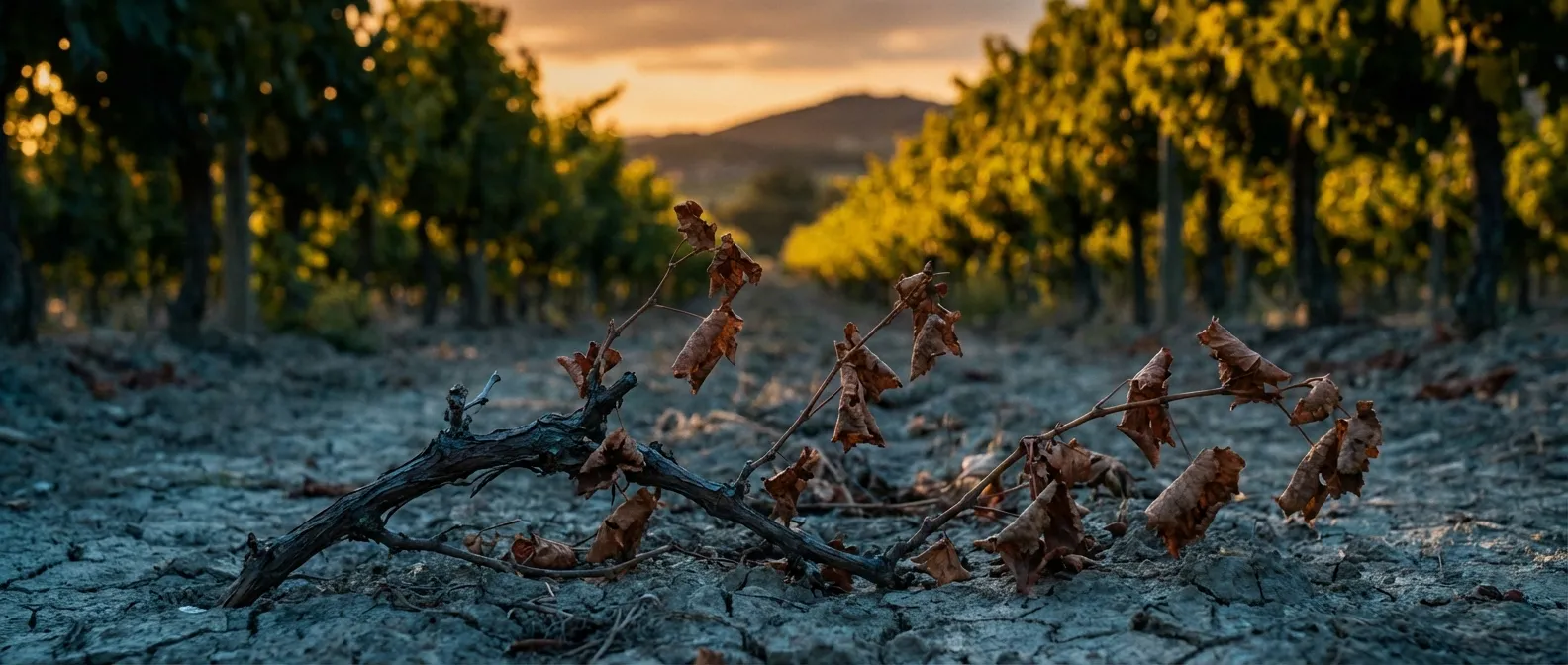
Part 3: The Branch That Withers
We need to talk about verse 6.
Not because it’s comfortable. Not because I have a tidy answer that makes it go away. But because ignoring the hardest verse in a passage is a special kind of dishonesty, and John 15 doesn’t give us that option.
If a man doesn’t remain in me, he is thrown out as a branch and is withered; and they gather them, throw them into the fire, and they are burned.
There it is.
A branch that doesn’t remain in the vine gets thrown out. It withers. It’s gathered up, thrown into the fire, and burned.
Jesus said that. Not a fire-and-brimstone preacher. Not an angry internet theologian. The same Jesus who washed feet and welcomed children and told the woman at the well that He was the living water — He said this. In the same conversation. Five verses after “I am the vine.”
And Christians have been arguing about what He meant ever since.
The Fight You’ve Probably Heard
If you’ve spent any time in church, you’ve encountered this debate — even if nobody called it by name.
One side says: Once you’re saved, you’re saved. Period. God’s grip is stronger than your ability to let go. A true believer can never lose their salvation because it was never theirs to lose — it’s God’s to keep.
The other side says: Salvation is relational, not transactional. You can choose to walk away from God the same way you chose to walk toward Him. Connection requires remaining, and remaining is ongoing.
Both sides have verses. Both sides have smart, sincere people. And both sides think the other is dangerously wrong.
Here’s what I want to do — and it might frustrate you if you’re looking for me to pick a side and declare victory. I want to sit with the tension. Because I think the tension itself is the point.
The Verses That Pull in Both Directions
Let’s be honest about what the Bible actually says. All of it. Not just the verses that support the position we already hold.
The “you’re secure” verses:
I give eternal life to them. They will never perish, and no one will snatch them out of my hand. My Father who has given them to me is greater than all. No one is able to snatch them out of my Father’s hand.
No one will snatch them. No one. That’s not ambiguous. Jesus doesn’t say “almost no one” or “no one except yourself.” He says no one. The Father’s hand is stronger than every force that exists.
For I am persuaded that neither death, nor life, nor angels, nor principalities, nor things present, nor things to come, nor powers, nor height, nor depth, nor any other created thing will be able to separate us from God’s love which is in Christ Jesus our Lord.
Nothing in all creation. Paul isn’t hedging. He’s making the most absolute statement human language allows: nothing can separate you from the love of God.
being confident of this very thing, that he who began a good work in you will complete it until the day of Jesus Christ.
God finishes what He starts. The work He began, He will complete. Not might. Will.
The “remain or else” verses:
If a man doesn’t remain in me, he is thrown out as a branch and is withered; and they gather them, throw them into the fire, and they are burned.
Thrown out. Withered. Burned. Those words don’t sound like “automatically secure no matter what.”
For concerning those who were once enlightened and tasted of the heavenly gift, and were made partakers of the Holy Spirit, and tasted the good word of God and the powers of the age to come, and then fell away, it is impossible to renew them again to repentance; seeing they crucify the Son of God for themselves again, and put him to open shame.
People who were enlightened, who tasted the heavenly gift, who shared in the Holy Spirit — and then fell away. The author of Hebrews says it’s impossible to renew them to repentance. That’s not describing people who were never really saved. That’s describing people who experienced the real thing.
For we have become partakers of Christ, if we hold the beginning of our confidence firm to the end,
“We have come to share in Christ, if indeed we hold our original confidence firm to the end.” That conditional “if” does a lot of heavy lifting.
yet now he has reconciled in the body of his flesh through death, to present you holy and without defect and blameless before him, if it is so that you continue in the faith, grounded and steadfast, and not moved away from the hope of the Good News which you heard, which is being proclaimed in all creation under heaven, of which I, Paul, was made a servant.
Paul says God will present you holy and blameless — if you continue in the faith. Another condition.
Sitting in the Tension
Here’s what I think is actually happening in John 15:6, and honestly, in the whole debate:
Both things are true. And the tension between them is not a problem to solve — it’s a reality to live in.
No one can snatch you from God’s hand. That’s real. The vine doesn’t let go of its branches. The gardener doesn’t abandon the vineyard. God’s love, once given, is not revoked on a whim.
But can you let go of the vine?
That’s what John 15:6 is wrestling with. Not a branch that was snatched away by some external force. Not a branch that slipped because the vine was weak. A branch that didn’t remain. That chose — through neglect or rebellion or slow drift — to disconnect from the source of life.
Nobody snatched it. It left.
And I think this distinction is the key to the whole passage.
Jesus isn’t warning you about God’s faithfulness. God is faithful. Always. Without exception. The vine never stops offering life. The gardener never walks away from the vineyard.
Jesus is warning you about yours.
What “Withering” Actually Looks Like
Let me be careful here, because this verse has been used as a club to beat anxious Christians into terror. That’s not what I’m doing, and that’s not what Jesus was doing.
John 15:6 isn’t describing someone who has a bad week. Or a bad year. Or a season of doubt. Or a crisis of faith where they scream at God and wonder if any of it is real.
Every faithful person in the Bible had those moments. David despaired. Elijah wanted to die. Peter denied Jesus three times. Thomas refused to believe. Job cursed the day he was born. These people weren’t withered branches — they were pruned branches going through the painful process of growth.
Doubt isn’t departure. Struggle isn’t separation. Wrestling with God is, paradoxically, one of the most connected things you can do — because you don’t wrestle with someone you’ve walked away from.
What John 15:6 describes is something different. It’s the slow, deliberate, sustained disconnection from the vine. Not a branch that’s hurting. A branch that has stopped drawing life. Stopped remaining. Stopped wanting to.
And the result isn’t that God punishes it. The result is that it does what disconnected branches do: it dries up. Naturally. Inevitably. Because the life was never self-generated. It came from the vine. And without the vine, there’s nothing left to sustain it.
The Part That Should Comfort You
I know this is heavy. So let me say something that might surprise you:
If you’re worried about John 15:6, it probably doesn’t apply to you.
Here’s why. The branch in verse 6 is described as someone who doesn’t remain. Present tense. Ongoing. It’s not a branch that stumbled, felt guilty, and is now terrified it’s been cast off. That branch is still aware of the vine. Still oriented toward it. Still feeling the pull of connection, even if it’s struggling.
The branch in verse 6 has stopped caring. It’s not wrestling with the vine — it’s ignoring it. It’s not doubting — it’s indifferent. The life has drained out not because of a crisis, but because of a thousand small decisions to stop drawing from the source.
The fact that you’re reading this — that you’re thinking about your connection to Christ, that you’re worried about whether you’re remaining — is itself evidence of connection. Dead branches don’t read devotionals about the vine.
“…If we endure, we will also reign with him. If we deny him, he also will deny us. If we are faithless, he remains faithful; for he can’t deny himself.”
Even when we are faithless — when our grip is weak, when our confidence falters, when we can barely feel the connection — He remains faithful. The vine doesn’t let go. Ever.
But the invitation to remain is still real. Not because God is threatening you, but because He’s offering you something. Ongoing, daily, deepening connection to the source of all life.
The question isn’t “Can I be disconnected against my will?” The answer to that is clearly no. No one can snatch you.
The question is: “Am I choosing to remain?”
Why Both Truths Matter
Here’s why I refuse to flatten this into one side of the debate:
If you only hold the “you’re secure” side, you risk complacency. The kind of faith that says “I prayed a prayer when I was twelve, so I’m good” — and then lives decades disconnected from the vine, producing nothing, with no relationship to speak of. That’s not security. That’s presumption. And John 15:6 stands directly in its path.
If you only hold the “you can lose it” side, you risk terror. The kind of faith that lives in constant anxiety, never sure if you’ve done enough, always wondering if today is the day God finally gives up on you. That’s not faithfulness. That’s fear. And John 10:28-29 stands directly in its path.
The truth lives in the tension. God holds you, and you choose to remain. His grip is unbreakable, and your response matters. These aren’t contradictions. They’re two sides of a relationship.
Every real relationship works this way. A parent’s love for a child is unconditional — and the child’s decision to stay in that love, to come home, to receive what’s offered, is still real and still matters. The parent doesn’t stop loving. But the child can stop living in that love. And both truths coexist without canceling each other out.
Peter: The Branch That Almost Withered
Want to see this in real time? Look at Peter.
Hours after Jesus gave the vine and branches talk, Peter denied Him. Three times. With cursing. He didn’t just stumble — he stood by a fire and swore he’d never met the man.
If any branch looked withered, it was Peter that night.
But what did Jesus do? He didn’t cast Peter off. He didn’t replace him. After the resurrection, He found Peter on a beach and asked him three times: “Do you love me?” (John 21:15-17). Three denials. Three restorations. The vine reached back for the branch.
Peter didn’t remain in the vine that night. But the vine remained faithful to Peter. And Peter came back. He chose to reconnect. And the fruit that came from that reconnection — the sermons, the church, the letters, the martyrdom — was more than Peter could have ever produced on his own.
That’s what the tension looks like in practice. God’s faithfulness and Peter’s return. The vine’s constancy and the branch’s choice.
So What Do We Do With Verse 6?
We don’t ignore it. We don’t weaponize it. We don’t use it to terrify people who are already connected and struggling.
We let it do what Jesus intended: wake us up to the reality that connection is not passive.
Remaining isn’t something that happens to you while you sleep. It’s a daily, active, ongoing choice to draw life from the vine. It’s not earning your salvation — it’s living in it. The way you live in a house. You don’t earn the house every morning. But you do wake up there. You do choose to stay. You do keep coming home.
Yes, and for this very cause adding on your part all diligence, in your faith supply moral excellence; and in moral excellence, knowledge; and in knowledge, self-control; and in self-control, perseverance; and in perseverance, godliness; and in godliness, brotherly affection; and in brotherly affection, love. For if these things are yours and abound, they make you to not be idle or unfruitful in the knowledge of our Lord Jesus Christ.
Add to your faith. Build on it. Not to earn your spot in the vine — that’s grace — but to bear the fruit that proves the life is flowing.
The warning of John 15:6 isn’t “God might abandon you.” It’s “Don’t abandon the vine.” And there’s a world of difference between those two warnings.
Reflect
-
Where do you land in the security-vs-perseverance debate? More importantly — does your position lead you toward complacency or connection? If your theology makes you lazy, something’s off. If it makes you terrified, something’s off.
-
Have you ever been through a season of spiritual dryness? A time when you felt disconnected, withered, far from God? What brought you back? Was it your effort, God’s pursuit, or both?
-
Read John 10:28-29 and John 15:6 back to back. Don’t resolve the tension. Just hold both. What does it feel like to believe both are true?
-
Is there an area of your life where you’ve stopped remaining? Not a dramatic departure — but a quiet drift? A place where you’ve slowly disconnected without deciding to? What would reconnection look like?
-
Peter denied Jesus and came back. If you’ve had your own “denial” moment — a failure, a betrayal, a season of walking away — does Peter’s story change how you see your own? The vine is still reaching for you.
Coming Up Next
We’ve faced the hardest verse. Now let’s turn to the most surprising part of John 15.
Jesus says that remaining in the vine produces fruit. But what kind of fruit? Most people assume He means good behavior — being nice, going to church, reading your Bible. But the fruit Jesus describes is something far deeper, far more surprising, and it starts with something nobody expects.
Joy.
Next: “The Fruit That Proves the Connection — And Why Joy Shows Up Earlier Than You’d Think”