

"Be Still and Know That I Am God" — The Verse That's Not About Your Quiet Time
The yoga-studio verse. The meditation-app verse. The calming lock-screen wallpaper verse. But Psalm 46 isn't a whispered invitation to morning devotions. It's a war psalm. And the 'be still' is a thunderous command to a raging world.
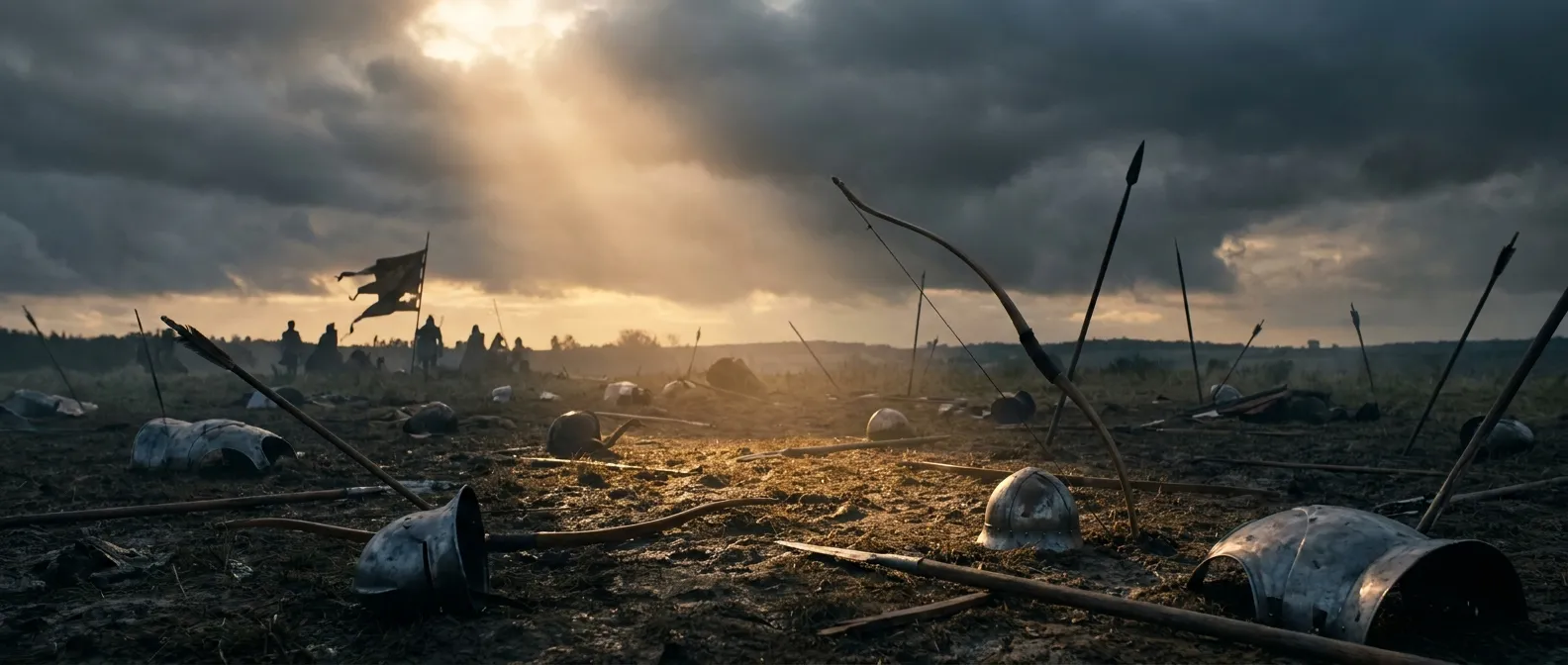
The Verse on the Meditation App
You’ve seen this verse everywhere.
“Be still, and know that I am God. I will be exalted among the nations. I will be exalted in the earth.”
It is on the tea mug. The candle label. The yoga studio wall. The lock-screen wallpaper with the sunrise over the ocean. The meditation app that charges you $11.99 a month to remind you to breathe.
The verse has become shorthand for slow down, light a candle, whisper-pray, exhale, be a calmer version of yourself.
That is a real human need, and there are real biblical verses that speak to it. Jesus invited weary people to come to Him and find rest. The sabbath is real. Quiet time is real. The ache to slow down is real.
But Psalm 46:10 is not the verse for that ache.
Read verse 9 first, and you’ll see why.
He makes wars cease to the end of the earth. He breaks the bow, and shatters the spear. He burns the chariots in the fire.
God isn’t whispering to a stressed-out commuter. He is shattering weaponry. He is silencing armies. He is ending wars. And right after breaking bows and burning spears, He thunders: Be still, and know that I am God.
That’s not a calming invitation. That’s a battlefield command.
And it hits completely differently when you read the whole psalm.
Psalm 46 Is a War Psalm
From the first line, Psalm 46 is violent.
For the Chief Musician. By the sons of Korah. According to Alamoth. God is our refuge and strength, a very present help in trouble. Therefore we won’t be afraid, though the earth changes, though the mountains are shaken into the heart of the seas; though its waters roar and are troubled, though the mountains tremble with their swelling. Selah.
Mountains falling into the sea. Oceans roaring. Earth shaking. This is not a poem for a rainy Sunday afternoon. It’s a poem for when civilization is collapsing.
Verse 6 keeps the temperature up.
The nations raged. The kingdoms were moved. He lifted his voice and the earth melted.
Nations raging. Kingdoms tottering. The earth literally melting at God’s voice. This is apocalyptic language, picturing a world falling apart at the seams.
And right in the middle of that chaos, the psalmist says the one thing that holds: The LORD of hosts is with us; the God of Jacob is our fortress.
Then verse 9. God makes wars cease. He breaks the bow. He shatters the spear. He burns the chariots.
And only then comes verse 10: Be still, and know that I am God.
The stillness in Psalm 46 is not the stillness of a candle-lit bath. It is the stillness of a battlefield after the King has won.
Who Is God Speaking To?
Here’s a detail that completely reshapes the verse. The Hebrew imperative in “Be still” is plural. Not a gentle whisper to one quiet soul in the morning. A command to a crowd.
And in the flow of the psalm, the crowd is not God’s people. The crowd is the nations. The raging kingdoms. The bow-wielding armies. The chariot drivers.
God isn’t pleading with His children to drink more tea. He is commanding His enemies to stand down.
The Hebrew word is raphah. It can mean be still, but it also carries the weight of cease, desist, let go, drop your weapons. Picture a police officer yelling “Freeze!” at an armed suspect. Not a yoga instructor saying “Let’s take a moment.”
Stop. Put your hands where I can see them. Know that I am God.
That is what’s happening in Psalm 46:10.
Which means the raging nations are the ones being told to settle down. Not you.
And suddenly the verse is about something much bigger than your morning routine. It’s about the sovereignty of God over every human kingdom that thinks it’s running the show.
But Doesn’t It Still Speak to Me?
Here’s the beautiful turn.
Once you hear Psalm 46:10 as God’s voice silencing the nations, it absolutely does still speak to you.
It just speaks in a completely different register.
Because the reason the psalm is in the Bible isn’t that the original audience needed a reminder to chill out. The original audience was a people surrounded by empires. They had watched Assyria eat its neighbors. They would watch Babylon eat them. The “nations raging” was not a metaphor. It was the six o’clock news.
And the comfort of Psalm 46 was this: the raging is not ultimate. God is.
The same is true for you.
Your raging nations might not be Babylon. Your raging nations might be: the news feed that wakes you up at 3 a.m. The political anxiety that has lodged in your chest. The medical system you’re navigating. The court case. The custody battle. The economy. The layoffs. The scroll. The noise.
Psalm 46:10 doesn’t primarily say to you, calm down, have a quiet time. It says to all the forces that are trying to scare you: Be still. Cease. Desist. Know that He is God.
Which means it does give you peace. But the peace comes from the source, not from your technique. Not because you finally learned how to breathe correctly, but because the God who makes wars cease is still in charge of the raging world you’re afraid of.
The peace of Psalm 46:10 is not the peace of an empty room. It’s the peace of a soldier who knows the King is on the field.
The Phrase After “Know That I Am God”
Keep reading verse 10.
Be still, and know that I am God. I will be exalted among the nations, I will be exalted in the earth!
That’s the payoff.
The reason for the stillness is not so you can feel better. The reason for the stillness is so that you can see who is being exalted. Not you. Not your kingdom. Not your enemies. Not your fears. Him.
Psalm 46:10 is not a self-care verse. It is a doxology.
Quiet down, everybody. Watch what He does next. He will be exalted among the nations. He will be exalted in the earth.
And then verse 11 repeats the refrain from verse 7.
Yahweh of Armies is with us. The God of Jacob is our refuge. Selah.
The LORD of hosts. Yahweh of armies. The God who has armies. The God who commands them. The God who, at the end of history, dismisses all the other armies with a single sentence.
He is with us.
That last line is the entire point of Psalm 46. The whole reason the raging world is survivable is not because the raging stops for our preferences. It is because the God of armies is in the fortress with us while it rages.
Stillness as Worship, Not Technique
Here is what this rescued verse actually invites.
Being still, in Psalm 46, is not a meditation technique. It is a response to revelation. When God roars, I am God, the only appropriate human response is to stop fighting Him, stop fighting the circumstances, stop trying to be God of your own little kingdom, and stand still under His.
Stillness is surrender before a King whose kingdom is unshakable.
Which means the application of Psalm 46:10 for your life is not find twelve minutes to sit cross-legged. It is stop trying to run the universe. Stop clenching. Stop bargaining. Stop strategizing against threats you were never meant to stop on your own. Drop your weapons. Look at who is actually on the field.
Then, in that surrender, you will also find yourself quieter in the morning. You will find yourself less panicked in the middle of the night. You will find your shoulders lower, your jaw less tight, your breath slower.
Not because Psalm 46 was ever a technique. But because once you have seen who God actually is in Psalm 46, your body starts to relax in response to Him.
Worship has always been the best muscle relaxer in Scripture.
What This Series Has Been About
This is the last part of The Rest of the Verse.
Six famous verses. Six sentences we skip. One uncomfortable question: what happens when you read the whole thing?
In Isaiah 30, rest is offered, and a people refuses it.
In Jeremiah 29, God plans a future that starts seventy years from now.
In Philippians 4, “all things” means enduring, not winning.
In Romans 8, “good” means Christlikeness, not comfort.
In John 14, “ask anything” lives inside “keep My commandments.”
And in Psalm 46, “be still” is not a whisper to you. It is a thunder over the whole earth.
None of these verses are less true once you read the rest. They are more true. They are weightier. They are sharper. They are harder in the ways faith is supposed to be hard, and more comforting in the ways that actually last.
A quiet rule for the rest of your reading life, from this point forward: don’t stop at the famous line. Look at what comes before it. Look at what comes after it. Look at who was holding the letter when it arrived. Look at what was on fire in the room when the words were spoken.
The verses we skip are almost always the verses we most need.
And the God who wrote them, kind enough to be compressed onto a coffee mug and wild enough to never actually fit on one, is inviting us to read the whole thing.
A Prayer for the Rest of the Verse
Father, I have skipped a lot of sentences. Not because I meant to. Because the famous ones were easier, and the rest of the verse felt heavier than I wanted to carry.
Forgive me for trading the whole passage for the highlight. Teach me to read the whole thing. Teach me to love the parts that would never fit on a mug. The parts that explain the ones I quote.
Help me to live on the right side of Isaiah 30. To settle in where You’ve placed me like Jeremiah 29 says. To learn the enduring strength of Philippians 4. To trust the conforming “good” of Romans 8. To pray like John 14 actually means. To be still before the King of Psalm 46.
Where I have believed a shallow version of Your promises, replace it with the real one. It will be harder. It will also be truer. And I have always needed the true one more than I needed the comfortable one.
You will be exalted among the nations. You will be exalted in the earth. You are with me. Be exalted in my life too.
Amen.
Reflection Questions
-
Which of these six verses had you been reading without the rest? Which sentence you skip hits hardest when you actually read it?
-
What are the “raging nations” in your life right now? The forces that feel louder than God. What changes when you hear Psalm 46:10 as spoken to them, not to you?
-
Has your “stillness” been a technique or a surrender? What’s the difference in your life between the two?
-
Going forward, what’s one practice you can build around always reading the context of a favorite verse? Even one verse above and one below is usually enough to change what the passage is saying.
-
Which part of this series do you most need to revisit? Go back. Read it slowly. Let it do the work it was meant to do.
The End of the Series, The Start of the Habit
You now have a habit to take into the rest of your reading life.
Whenever you see a famous verse, a sentence on a mug, a line in a worship song, a quote on a graduation card, do one thing before you do anything else.
Read the rest of the verse.
Read the sentence before it. Read the sentence after it. Read the paragraph around it. Read who was holding the letter. Read what was on fire in the room.
The God of Scripture is not afraid of the full picture. He wrote it. He is waiting for you to love the whole thing, not just the parts that fit on merchandise.
And when you read the whole thing, you will find out something quietly astonishing.
The verses you were already loving were always bigger than you thought.
Back to the series: The Rest of the Verse — The Sentences We Skip