

"Search Me, O God" — The Prayer That Invites God Into the Parts You've Been Hiding
David didn't ask God for protection. He didn't ask for provision. He asked God to look at the parts of himself he'd been hiding, and to not look away. Six words. Three seconds. The kind of prayer you don't pray casually once you understand what you're saying.
Most Prayers Are Safe
Let’s be honest about how most of us pray.
We pray for safety. We pray for health. We pray for our kids, our jobs, our parking spots (don’t pretend you haven’t). We pray for things to go well and for problems to go away.
And there’s nothing wrong with any of that. Jesus told us to bring our needs to the Father. He modeled it. “Give us today our daily bread” is a prayer for provision, and it came straight from His mouth.
But there’s a category of prayer that most Christians never touch. Not because they don’t know the words — but because they know exactly what the words mean, and the cost terrifies them.
I’m calling them dangerous prayers. Not dangerous because God might hurt you. Dangerous because they change you — and the version of you on the other side might not look anything like the version praying the words.
And the most dangerous one of all? It’s only six words.
Six Words That David Prayed (And Most of Us Won’t)
Near the end of Psalm 139, after one of the most beautiful passages in all of Scripture — the psalm about God knowing you before you were born, about being fearfully and wonderfully made, about God’s thoughts outnumbering the grains of sand — David does something unexpected.
He stops talking about God. And starts talking to Him.
Search me, God, and know my heart. Try me, and know my thoughts. See if there is any wicked way in me, and lead me in the everlasting way.
Six words: Search me, God, and know my heart.
On paper, they look gentle. Almost poetic. The kind of verse you’d see cross-stitched on a pillow in your grandmother’s guest room.
But read them again. Slowly. And think about what you’re actually asking.
You’re inviting the God who sees everything — everything — to look directly at the parts of yourself you work hardest to hide. Not the public version. Not the Sunday version. Not the version you post about. The real one. The 2 AM one. The one that exists when every mask is off.
David isn’t asking for comfort. He’s asking for a full-body MRI of his soul — and he’s giving God permission to show him what the scan reveals.
That’s not a safe prayer. That’s a grenade with the pin pulled.
Why This Prayer Is So Rare
Think about the last time you genuinely asked God to show you what’s wrong with you.
Not “forgive me for my sins” — that’s a general prayer, and it’s easy because it’s vague. You can pray that on autopilot. You can pray that while mentally composing your grocery list.
I mean the kind of prayer where you get quiet, get still, and say: “God, I’m giving You permission to spotlight the thing I’m hiding. The thing I’ve rationalized. The thing I’ve renamed so it doesn’t sound as bad. Show me.”
Most of us don’t pray that. And the reason is simple: we already know there’s something there.
We know about the bitterness we’ve rebranded as “boundaries.” The gossip we’ve disguised as “prayer requests.” The addiction we’ve minimized as “everyone struggles with something.” The relationship we know isn’t right but can’t imagine ending. The envy that scrolls through social media at midnight. The anger that leaks out at the people who least deserve it.
We know. We already know. And the last thing we want is for God to confirm it — because once He does, we can’t pretend anymore.
There is no creature that is hidden from his sight, but all things are naked and laid open before the eyes of him to whom we must give an account.
Here’s the gut-punch of this verse: God already sees all of it. Every hidden thing. Every dark corner. Every carefully curated blind spot.
The prayer “search me” doesn’t give God access He didn’t already have. It gives you access to what He already sees. You’re not opening a door for God. You’re asking God to open a door for you.
That’s the difference. And that’s why it’s terrifying.
What David Understood (That We’ve Forgotten)
Context matters here. Psalm 139 isn’t written by a squeaky-clean religious leader coasting through life. It’s written by David — and David had seen things. Done things.
This is the man who committed adultery with Bathsheba while her husband was on the battlefield fighting David’s war. The man who, when she got pregnant, tried to cover it up — and when the cover-up failed, arranged for her husband Uriah to be killed in combat. Murder by memo.
David knew what hidden sin looked like. He’d lived in it for almost a year before the prophet Nathan confronted him. And during that year, listen to how David described what the hiding did to him:
When I kept silence, my bones wasted away through my groaning all day long. For day and night your hand was heavy on me. My strength was sapped in the heat of summer. Selah.
“My bones wasted away.” “My strength was sapped.”
This isn’t poetic exaggeration. Anyone who’s ever carried a secret knows this feeling — the exhaustion of maintaining the lie, the slow erosion of your energy, the way the hidden thing becomes the loudest thing in every room even though nobody else can hear it.
David carried that weight. And when Nathan finally said those four devastating words — “You are the man” (2 Samuel 12:7) — something broke open. Not just guilt. Relief.
The hiding was over.
And so when David writes Psalm 139:23 — “Search me, God” — he’s not writing theory. He’s writing from the scar tissue. He’s saying: I know what happens when I hide. I know what it costs. So God, don’t let me do it again. Search me. Find whatever I’m burying before it buries me.
The Part Nobody Talks About: “Know My Thoughts”
We tend to focus on “search me” and “see if there is any wicked way in me” — the sin-finding part. But David includes something else that gets skipped over:
Search me, God, and know my heart. Try me, and know my thoughts.
Wait. Try me, and know my thoughts?
That Hebrew word for “thoughts” — sar’appay — isn’t talking about your grocery list. It means your disquieting thoughts. Your anxious, restless, churning inner world. The fears. The worries. The things that keep you up at night. The what-ifs and the worst-case scenarios and the quiet dread that sits in your chest.
David isn’t just asking God to find his sin. He’s asking God to find his fear.
This is stunning. Because David is recognizing something most of us miss: anxiety and hidden sin are often the same root wearing different masks.
Think about it. Why do we hide things from God? Because we’re afraid. Afraid of what He’ll say. Afraid of what He’ll require. Afraid that if He really sees us, He’ll leave.
The sin isn’t just the action. The sin is the fear underneath it — the fear that says God isn’t safe enough to be honest with. That His love has a limit. That His grace has an expiration date.
David is asking God to search all of it. Not just the behavioral stuff, but the belief system underneath. Not just “what did I do wrong?” but “what am I believing that’s wrong?”
But Yahweh said to Samuel, “Don’t look on his face, or on the height of his stature, because I have rejected him; for I don’t see as man sees. For man looks at the outward appearance, but Yahweh looks at the heart.”
God doesn’t just want your behavior. He wants your beliefs. He doesn’t just want to change what you do. He wants to change what you’re afraid of.
What Happens When You Actually Pray This
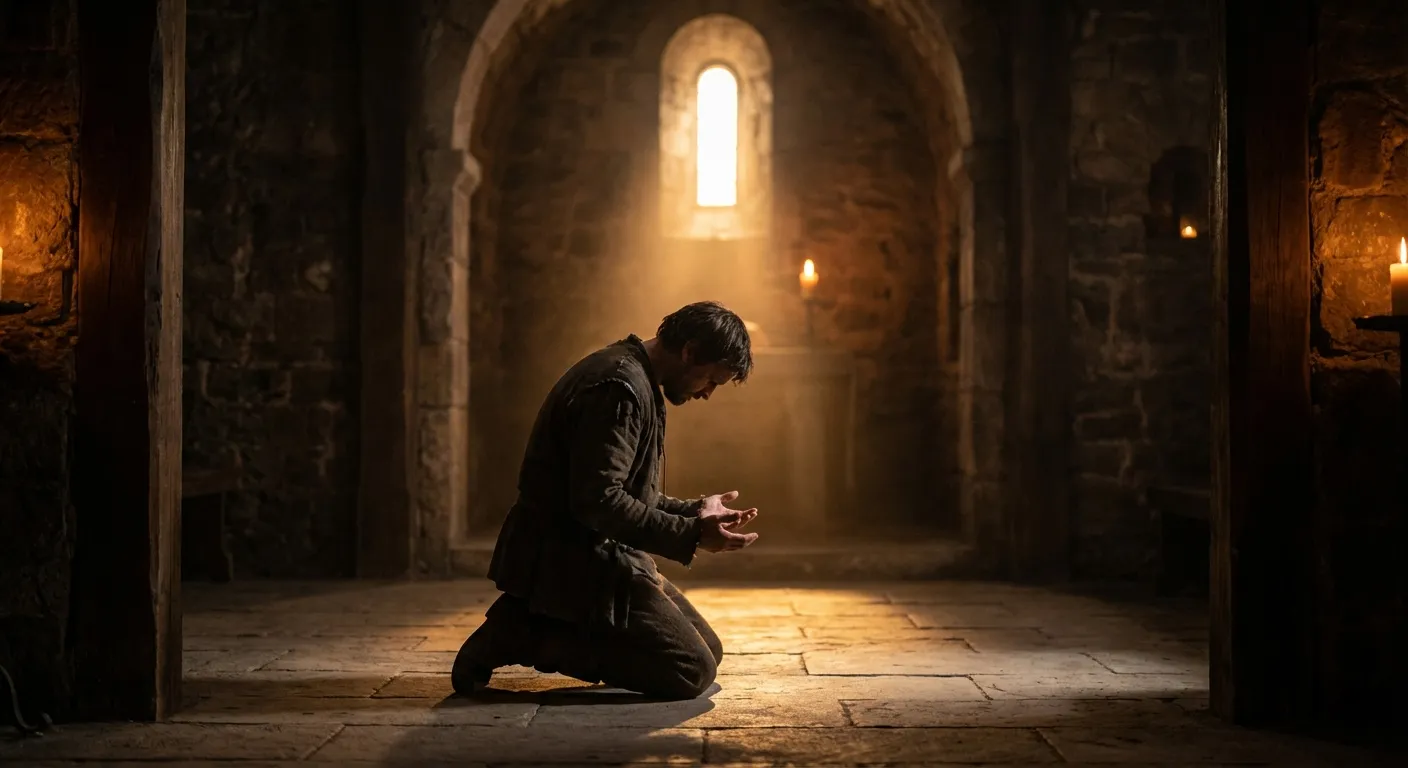
So what happens when you actually say the words? When you kneel (or sit, or lie face-down on the carpet at midnight, or whisper it in the shower) and say, “God, search me. All of me. Don’t skip anything”?
First: silence. God usually doesn’t answer dangerous prayers with a thunderclap. He answers with stillness — the kind that forces you to stop talking and start listening. The kind most of us can’t tolerate for more than thirty seconds before reaching for our phone.
Second: specificity. This is the part that catches people off guard. You expect a general sense of conviction. Instead, you get a name. A memory. A specific moment. The Holy Spirit doesn’t deal in vague guilt — He brings precision.
However, when he, the Spirit of truth, has come, he will guide you into all truth, for he will not speak from himself; but whatever he hears, he will speak. He will declare to you things that are coming.
The Spirit’s job isn’t to make you feel generically bad. It’s to show you the specific truth about a specific thing — and then lead you somewhere better.
Third: tenderness. This is the part nobody expects. You pray “search me” bracing for a lecture, and instead you get a Father who already knew and was already reaching for you.
Yahweh is near to those who have a broken heart, and saves those who have a crushed spirit.
When the searching reveals something painful, God doesn’t stand over you with crossed arms. He moves closer. The exposure isn’t punishment. It’s the beginning of surgery — and the Surgeon has the gentlest hands in the universe.
The Difference Between Conviction and Condemnation
This is where a lot of people get stuck, so let’s be precise.
Condemnation says: “You’re garbage. You’ll never change. God is done with you.” It’s heavy, vague, and drives you away from God.
Conviction says: “This specific thing is hurting you. Let’s deal with it together. You’re not stuck.” It’s specific, purposeful, and drives you toward God.
There is therefore now no condemnation to those who are in Christ Jesus, who don’t walk according to the flesh, but according to the Spirit.
If the voice you hear after praying “search me” sounds like condemnation — hopeless, shame-drenched, makes-you-want-to-give-up — that’s not God. That’s the accuser. And you can tell him to sit down.
But if the voice is specific, tender, uncomfortable but not crushing, leading you somewhere instead of just leaving you on the floor — that’s the Holy Spirit doing exactly what you asked Him to do.
Don’t run from it. Stay in it. That discomfort is the feeling of healing beginning.
The Four Movements of “Search Me”
David’s prayer has a rhythm to it. Four movements, each building on the last:
1. “Search Me” — Invitation
You open the door. You say, “I’m done hiding.” This is the hardest part, because it requires admitting you might be hiding something.
2. “Know My Heart” — Intimacy
This isn’t God gathering evidence for a prosecution. “Know” here is the Hebrew word yada — the same word used for the deepest kind of relational knowledge. David is asking for intimacy, not investigation. He wants to be known, not just caught.
3. “See If There Is Any Wicked Way” — Honesty
Now comes the examination. The word “wicked” here doesn’t just mean moral evil — it carries the weight of pain, hurt, grief. David is saying: “Show me where I’m hurting myself. Show me where I’m hurting others. Show me the path I’m on and where it leads.”
4. “Lead Me in the Everlasting Way” — Transformation
This is the prayer’s destination. David doesn’t just want to know what’s wrong — he wants to be led somewhere better. The point was never the diagnosis. The point was the healing. The searching exists so the leading can begin.
He restores my soul. He guides me in the paths of righteousness for his name’s sake.
The whole prayer, start to finish: Search. Try. See. Lead.
Why This Is Actually the Safest Prayer You’ll Ever Pray
I know I’ve been calling this prayer “dangerous.” And it is — to your pride, your comfort, your carefully maintained illusions.
But here’s the paradox: the prayer that feels the most dangerous is actually the safest one you can pray.
Because the alternative isn’t that the hidden things stay hidden. The alternative is that they grow. In the dark, they always grow.
The resentment you won’t name becomes the bitterness that poisons your marriage. The lust you won’t confront becomes the addiction that dismantles your integrity. The fear you won’t face becomes the anxiety that steals your peace for years.
He who conceals his sins doesn’t prosper, but whoever confesses and renounces them finds mercy.
Hidden things don’t stay small. They metastasize. And the only thing more terrifying than letting God search you is refusing to — and finding out ten years later what the hidden thing became.
David prayed “search me” because he’d already lived the alternative. He hid for a year, and it nearly destroyed him. He knew: the prayer that costs you your pride today will save your life tomorrow.
A Practice for This Week
Here’s what I want you to do. Not someday. Tonight.
1. Get alone. No music. No phone. No noise. Just you and silence and God.
2. Pray the six words. Out loud if you can. “Search me, God, and know my heart.” Mean them.
3. Wait. Don’t fill the silence. Don’t redirect to your prayer list. Sit in it. Give God sixty seconds of your undivided, undistracted attention. (It will feel like an hour. That’s normal.)
4. Write down what comes. A name. A memory. A habit. A fear. Whatever surfaces, don’t push it back down. Capture it. Look at it.
5. Pray the last line. “Lead me in the everlasting way.” Because the point was never to wallow in what’s wrong — it’s to be led to what’s right.
Reflection Questions
-
When was the last time you genuinely asked God to search your heart — not as a religious phrase, but as a real invitation?
-
Is there something you’ve been hiding from God (or from yourself) that you already know is there? What would it feel like to name it?
-
What’s the difference between how you respond to conviction versus condemnation? Can you identify which voice you tend to hear?
-
David prayed “search me” from scar tissue — he knew the cost of hiding. What has hiding cost you?
-
If you prayed “search me” tonight and God answered, what are you most afraid He’d show you? (That answer alone is worth sitting with.)
Coming Next
David’s prayer started with “search me.” But there’s another prayer in Scripture that takes things a step further — a prayer where instead of asking God to find what’s broken, you ask Him to break what needs breaking.
It’s the prayer of brokenness. And it might be the most counterintuitive request you’ll ever make to a God who is supposed to make your life better.
Next: “Break Me” — The Prayer You Pray When You’re Tired of Holding Yourself Together