

Did Jesus Actually Rise from the Dead? — The Historical Case, Laid Out Honestly
Forget 'just believe.' The resurrection of Jesus is one of the most scrutinized events in ancient history — and the evidence is sturdier than most Sunday schools ever let on. Here's the case, laid out honestly, for skeptics and believers alike.
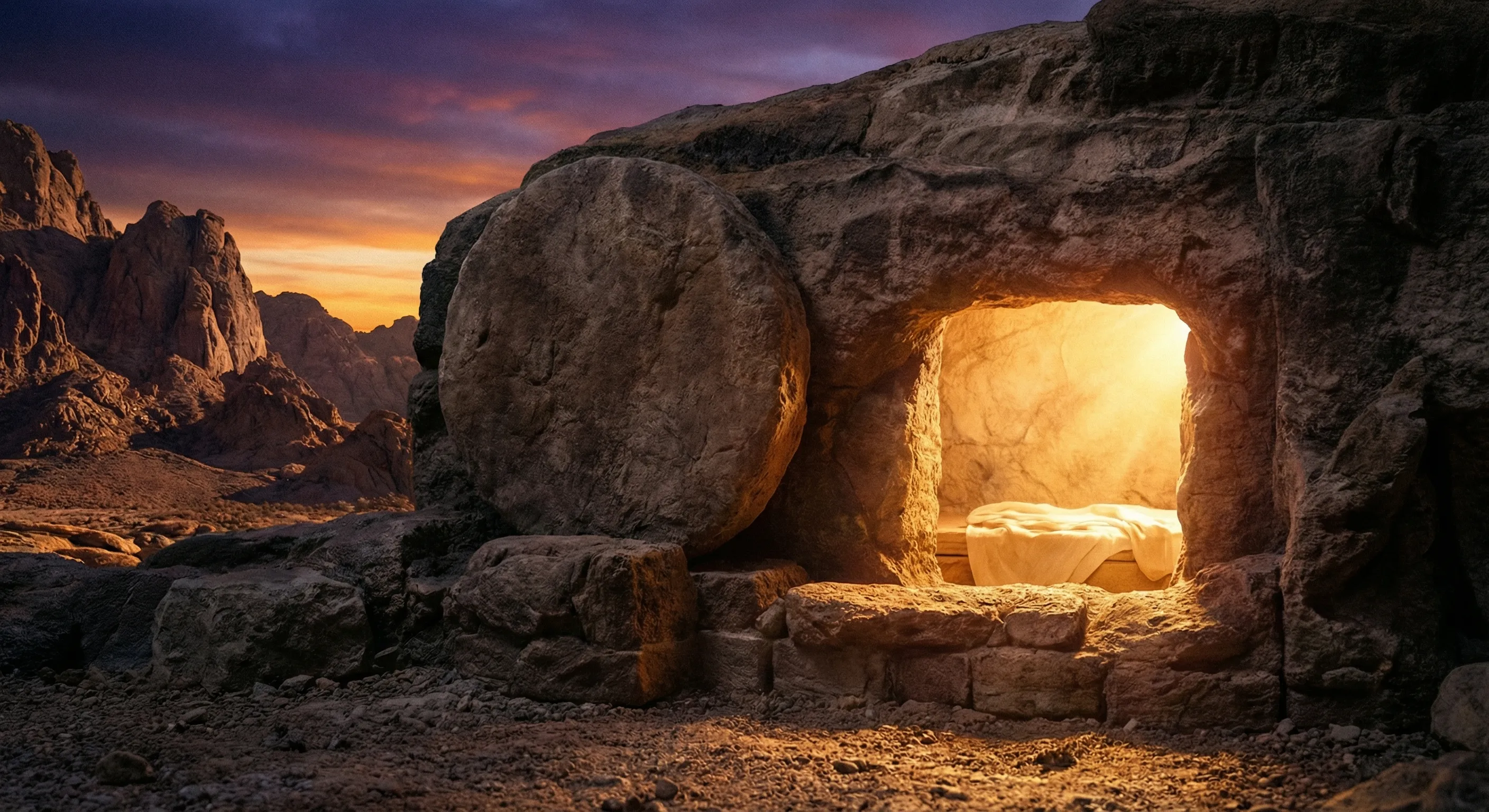
If This Didn’t Happen, Nothing Else Matters
Let’s be direct: if Jesus didn’t rise from the dead, Christianity is a lie.
That’s not an attack — it’s what the Apostle Paul himself said:
If Christ has not been raised, your faith is vain; you are still in your sins.
Paul didn’t hedge. He didn’t say, “Even if the resurrection is metaphorical, the teachings are still valuable.” He said: if this didn’t happen, we’re wasting everyone’s time.
So did it happen?
That question deserves more than a Sunday School flannel graph. It deserves the kind of investigation you’d give to any historical claim that carries this much weight. Let’s look at what we actually know — from history, from hostile witnesses, from the behavior of the earliest Christians, and from the alternatives that have been proposed.
You might be surprised at where the evidence lands.
What Mainstream Historians Agree On
Before we get to the resurrection itself, let’s establish what virtually all serious historians — Christian, atheist, agnostic — agree on. These aren’t faith claims. They’re historical consensus:
1. Jesus Was Crucified Under Pontius Pilate
This is as close to universally accepted as ancient history gets. It’s confirmed by:
- The Gospels (Matthew 27, Mark 15, Luke 23, John 19)
- Tacitus (Roman historian, ~AD 116): “Christus… suffered the extreme penalty during the reign of Tiberius at the hands of one of our procurators, Pontius Pilatus” (Annals 15.44)
- Josephus (Jewish historian, ~AD 93): “Pilate, at the suggestion of the principal men amongst us, had condemned him to the cross” (Antiquities 18.3.3)
Even skeptical scholars like Bart Ehrman affirm: “The crucifixion of Jesus is one of the most certain facts of history.”
2. His Tomb Was Found Empty
The empty tomb is reported in all four Gospels and is indirectly confirmed by the earliest Jewish response to Christianity. Think about this: when the disciples started preaching the resurrection in Jerusalem — the same city where Jesus was buried — the Jewish authorities didn’t say, “What are you talking about? The body is right there.”
Instead, Matthew 28:11-15 records that they bribed the guards to say the disciples stole the body. That’s an admission that the tomb was empty. They didn’t dispute the empty tomb; they tried to explain it away.
3. Multiple People Claimed to See Him Alive
Paul, writing in 1 Corinthians 15:3-8 (dated by most scholars to within 3-5 years of the crucifixion), lists the appearances:
“He appeared to Cephas, then to the twelve. Then he appeared to over five hundred brothers at once, most of whom remain until now… Then he appeared to James, then to all the apostles, and last of all, as to the child born at the wrong time, he appeared to me also.”
This isn’t legend that grew over centuries. This is a list of named, living witnesses, circulated while those witnesses could still be questioned. Paul is essentially saying: “Don’t take my word for it — go ask them.”
4. The Disciples Were Transformed
Before the resurrection, the disciples were hiding behind locked doors, terrified (John 20:19). Peter had just denied Jesus three times.
After? They were standing in the public square, proclaiming the resurrection to the same authorities who had just crucified their leader — and they were willing to die for it.
Something happened between Friday and Sunday that turned cowards into martyrs.
The Alternative Explanations
If Jesus didn’t rise, what happened? Every alternative has been proposed. Let’s examine the main ones honestly.
Theory 1: The Disciples Stole the Body
This was the first counter-explanation (Matthew 28:13), and it’s the weakest.
Problems:
- The tomb was guarded (Matthew 27:62-66). Roman guards faced execution for falling asleep on duty.
- Stealing the body explains the empty tomb, but not the appearances. Did 500+ people hallucinate?
- Most critically: people don’t die for what they know is a lie. Liars make terrible martyrs. Every one of the apostles faced persecution; most were executed. Not one recanted.
As philosopher Peter Kreeft puts it: “Liars don’t make martyrs.”
Theory 2: Everyone Hallucinated
Problems:
- Hallucinations are individual psychological events. They don’t happen to groups of 500 people simultaneously.
- The appearances happened to different people, in different places, over 40 days — not in a single emotional moment.
- Hallucinations don’t explain the empty tomb. Even if everyone hallucinated, the body would still be in the grave, and the authorities could have produced it.
- James (Jesus’ brother) and Paul were skeptics before their encounters. Hallucinations tend to happen to people who want to see something. James thought Jesus was crazy (Mark 3:21). Paul was actively hunting Christians (Acts 8:3).
Theory 3: Jesus Didn’t Really Die (The “Swoon” Theory)
The idea: Jesus survived the crucifixion, revived in the cool tomb, and appeared to the disciples.
Problems:
- Roman soldiers were professional executioners. They confirmed death by spear thrust to the side, producing blood and water (John 19:34) — which modern medicine recognizes as a sign of cardiac and pleural fluid separation. He was dead.
- Even if he somehow survived: a man who had been scourged, crucified, stabbed, wrapped in burial cloths, and sealed in a tomb would not roll away a massive stone, overpower armed guards, and then convince his followers he had conquered death. He would need a hospital, not a pulpit.
- The “swoon” theory was so thoroughly dismantled by 19th-century scholar David Friedrich Strauss (himself a skeptic) that almost no serious historian holds it today.
Theory 4: It’s All Legend That Grew Over Time
Problems:
- The 1 Corinthians 15 creed dates to within 3-5 years of the crucifixion. That’s not enough time for legend to develop — the eyewitnesses were still alive.
- The Gospels include details that would be embarrassing to invent:
- Women as first witnesses. In first-century Jewish culture, women’s testimony wasn’t even accepted in court. If you’re inventing a story to convince people, you don’t make your star witnesses women. Unless that’s what actually happened.
- The disciples’ cowardice. They ran. Peter denied Jesus. Thomas doubted. If you’re writing propaganda for your movement, you don’t make the founders look this bad.
- Jesus’ own family thought he was crazy (Mark 3:21). James became a believer only after the resurrection (1 Corinthians 15:7). Why include this if you’re manufacturing a legend?
Theory 5: The Wrong Tomb
Problems:
- Joseph of Arimathea, a named member of the Sanhedrin, provided the tomb. His tomb. People knew where it was.
- The women watched where he was laid (Mark 15:47).
- If anyone went to the wrong tomb, the authorities could have gone to the right one and produced the body. Game over. They didn’t.
The Case That Convinced a Skeptic
The evidence is strong enough that it has convinced serious skeptics who set out to disprove the resurrection:
- Lee Strobel — atheist journalist at the Chicago Tribune. Investigated the resurrection to debunk his wife’s new faith. Became a Christian. Wrote The Case for Christ.
- Sir Lionel Luckhoo — Guinness World Record holder for most consecutive murder trial acquittals (245). Investigated the resurrection with legal rigor. Conclusion: “I say unequivocally that the evidence for the resurrection of Jesus Christ is so overwhelming that it compels acceptance by proof which leaves absolutely no room for doubt.”
- Simon Greenleaf — Harvard Law professor, one of the founders of American evidence law. Applied rules of legal evidence to the Gospel accounts. Concluded the resurrection witnesses would be found credible in any court of law.
These weren’t people looking for faith. They were looking for facts. The facts won.
What the Resurrection Means
If the evidence holds — and it does — then the resurrection isn’t just a historical curiosity. It changes everything:
It validates everything Jesus claimed. He said he was the Son of God (John 10:30). He said he had authority to forgive sins (Mark 2:10). He said he was the way, the truth, and the life (John 14:6). If he rose from the dead, those claims carry a weight that no other religious figure’s claims can match.
It defeats death. Not metaphorically. Actually.
“Death, where is your sting? Hades, where is your victory?”
It means your story isn’t over. Whatever tomb you’re staring at — a diagnosis, a divorce, a failure, a loss — the God who walked out of his own grave has something to say about yours.
Jesus said to her, “I am the resurrection and the life. He who believes in me will still live, even if he dies.…”
An Invitation, Not an Argument
Here’s the thing: the evidence can get you to the door. It can’t make you walk through it.
The resurrection isn’t ultimately about winning a debate. It’s about a person. A living person who conquered the grave and is offering you the same life — not in some distant afterlife, but starting now.
Behold, I stand at the door and knock. If anyone hears my voice and opens the door, then I will come in to him and will dine with him, and he with me.
The evidence says the tomb is empty.
The question is: what will you do with that?
Reflection Questions
- Which piece of evidence for the resurrection do you find most compelling? Which do you still have questions about?
- Have you ever honestly investigated the claims of Christianity, or have you been operating on assumptions (either for or against)?
- If the resurrection is true, how should that change the way you live today — not someday, but today?
- Paul said in 1 Corinthians 15:17 that if Christ hasn’t risen, faith is futile. Why do you think he made the entire faith hinge on a single historical event?
- Is there someone in your life who’s asking tough questions about faith? How could you share what you’ve learned here?
Dig Deeper
- Book: The Case for Christ by Lee Strobel
- Book: The Resurrection of the Son of God by N.T. Wright
- Book: Cold-Case Christianity by J. Warner Wallace (former cold-case detective who investigated the Gospels like a crime scene)
- Scripture: Read 1 Corinthians 15 in full — Paul’s entire case for the resurrection
- Scripture: Read John 20-21 — the post-resurrection appearances
The tomb is empty. The witnesses are on record. The alternative explanations don’t hold up. And two thousand years later, the invitation still stands.
What will you do with it?