

Why Is There Something Rather Than Nothing? — The Question Science Can't Answer
It's the most fundamental question in philosophy. The universe exists — but why? Science can describe how things work, but can it explain why anything exists at all?
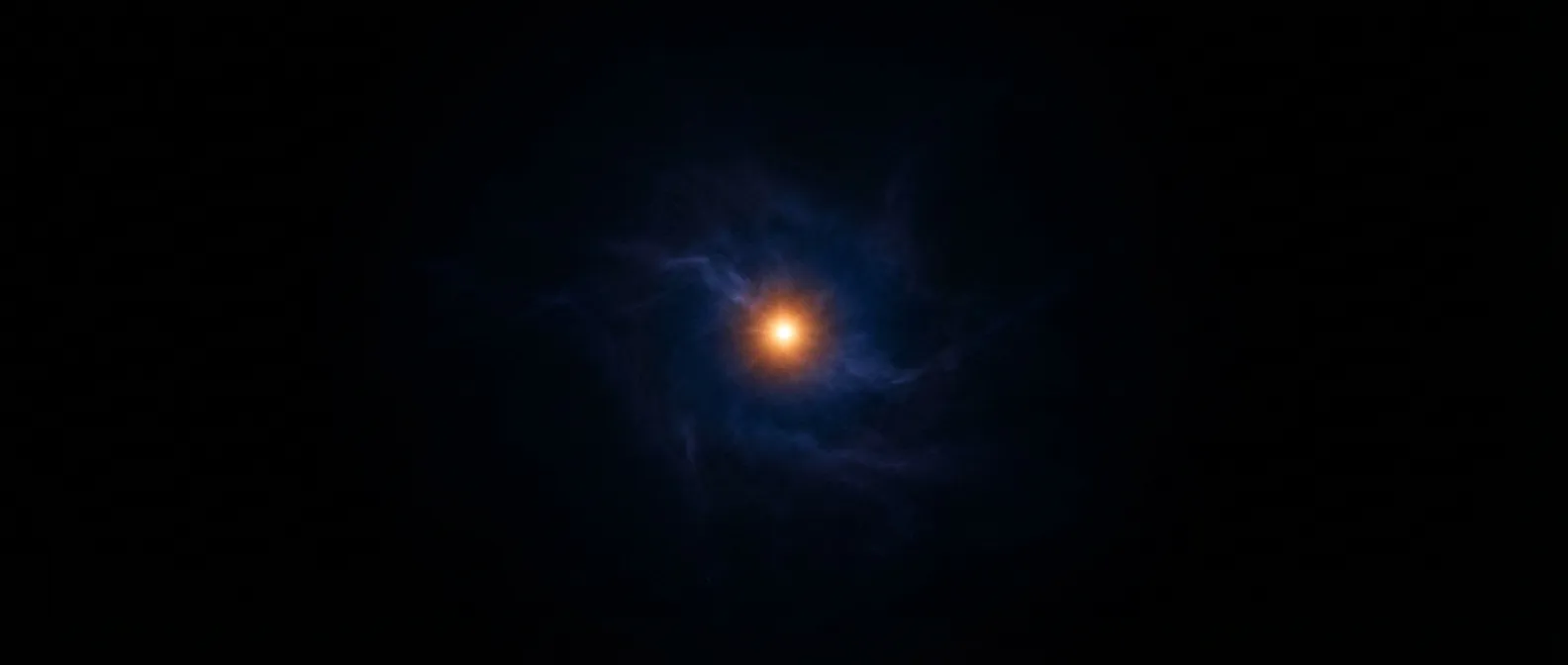
Gottfried Wilhelm Leibniz, the German polymath who co-invented calculus and laid the foundations of formal logic, asked what he called “the first question which should rightly be asked”:
Why is there something rather than nothing?
It’s deceptively simple. Read it again. Why does anything exist at all?
Not “why does this particular thing exist?” Not “how did the solar system form?” or “what caused the Big Bang?” Those are scientific questions with scientific answers (or at least scientific research programs). Leibniz’s question goes deeper. It asks why there’s a universe — any universe — rather than absolute nothingness. No matter, no energy, no space, no time, no laws of physics. Just… nothing.
This isn’t a trick question or a word game. It’s the question that sits beneath every other question. And after 300+ years, it remains the one question that science, by its very nature, cannot answer — because science operates within the universe and assumes the existence of natural laws. It can’t explain why there’s a universe with laws in the first place.
Philosophy can at least take a swing. And the most powerful philosophical argument addressing this question has been refined over a millennium of thought. It’s called the Kalam Cosmological Argument.
The Kalam Argument: Three Lines That Changed Philosophy
The argument, in its modern formulation popularized by philosopher William Lane Craig, runs:
- Everything that begins to exist has a cause.
- The universe began to exist.
- Therefore, the universe has a cause.
That’s it. Three premises, logically valid. If premises 1 and 2 are true, the conclusion follows with deductive certainty.
The question, then, is whether the premises hold up. Let’s examine each one.
Premise 1: Everything That Begins to Exist Has a Cause
This might seem so obvious it doesn’t need defending. Things don’t pop into existence uncaused. Your coffee didn’t spontaneously materialize this morning. Galaxies don’t blink into being from nothing.
The principle of sufficient reason — the idea that everything that exists has an explanation for its existence — has been a foundational assumption of rational thought since at least Parmenides in the 5th century BC. As philosopher Alexander Pruss has argued, denying this principle undermines the very possibility of rational inquiry: if things can just pop into existence without causes, then anything could happen at any time for no reason, and science would be impossible.
But some skeptics challenge this premise, usually by appealing to quantum mechanics. We’ll address that objection below.
For now, the key point: in the entire history of human experience, we have never observed anything beginning to exist without a cause. This isn’t just an inductive generalization — it’s a metaphysical principle grounded in the nature of being. From nothing, nothing comes. The Latin phrase ex nihilo nihil fit has been affirmed by virtually every major philosophical tradition for over two millennia.
Premise 2: The Universe Began to Exist
This is where the argument gets scientifically substantive. A hundred years ago, most scientists assumed the universe was eternal — it had always existed, in some form, stretching infinitely into the past. An eternal universe doesn’t need a cause for its beginning because it doesn’t have a beginning.
That assumption has been demolished. Multiple independent lines of evidence now point to the universe having a definite beginning.
The Big Bang
In the 1920s, Edwin Hubble observed that galaxies are moving away from each other — the universe is expanding. Run the expansion backward, and you arrive at a point of infinite density and temperature: the initial singularity. This is the Big Bang — not an explosion in space, but the beginning of space, time, matter, and energy themselves.
The Big Bang model has been confirmed by multiple independent observations:
- The cosmic microwave background radiation (discovered 1965): the residual heat signature of the initial expansion, exactly as predicted by Big Bang cosmology
- The abundance of light elements: the ratio of hydrogen to helium in the universe matches the predictions of Big Bang nucleosynthesis with remarkable precision
- The expansion rate: measured and refined by decades of astronomical observation, most recently by the Planck satellite
The Big Bang doesn’t just say the universe changed form at some point. It says space and time themselves came into existence. As Stephen Hawking wrote in The Nature of Space and Time (1996, with Roger Penrose): “Almost everyone now believes that the universe, and time itself, had a beginning at the Big Bang.”
The BGV Theorem
In 2003, cosmologists Arvind Borde, Alan Guth, and Alexander Vilenkin proved a theorem that has become one of the most significant results in modern cosmology.
The Borde-Guth-Vilenkin theorem states that any universe which has, on average, been expanding throughout its history cannot be past-eternal — it must have a beginning. This is a remarkable result because it applies regardless of the physical description of the early universe. It doesn’t depend on general relativity, quantum gravity, string theory, or any specific model of physics. It’s a kinematic result based on the geometry of spacetime itself.
Vilenkin has been explicit about its implications, writing in Many Worlds in One (2006):
“It is said that an argument is what convinces reasonable men and a proof is what it takes to convince even an unreasonable man. With the proof now in place, cosmologists can no longer hide behind the possibility of a past-eternal universe. There is no escape: they have to face the problem of a cosmic beginning.”
This is crucial because it closes off the most common escape route: the suggestion that maybe the Big Bang wasn’t really the beginning — maybe there was something before it (a contracting universe, a multiverse, a cyclical cosmos). The BGV theorem says it doesn’t matter. If the universe (or multiverse, or whatever larger reality you postulate) has been expanding on average, it had a beginning.
The Second Law of Thermodynamics
The second law states that entropy (disorder) in a closed system always increases over time. The universe is trending toward thermodynamic equilibrium — a state of maximum entropy where no further work can be done (sometimes called “heat death”).
If the universe were past-eternal, it would have already reached maximum entropy an infinite time ago. The fact that the universe still has usable energy — stars still burn, life still thrives — means it hasn’t been running forever. It must have started at some finite point in the past with low entropy.
As physicist Paul Davies has argued: “The universe can’t have existed forever. We know there must have been an absolute beginning a finite time ago.”
Philosophical Arguments Against an Infinite Past
There’s also a purely philosophical argument. An actually infinite number of past events is arguably impossible — not just practically, but conceptually. If the past were infinite, then to arrive at the present moment, an infinite number of events would have had to be completed — one after another, sequentially. But you can never complete an infinite series by sequential addition. It’s like trying to count down from negative infinity to zero — you’d never arrive.
This argument (developed by medieval Islamic philosopher al-Ghazali and refined by Craig) is controversial among philosophers, but it provides an independent reason to doubt that the past is infinite, supplementing the scientific evidence.
The Conclusion: The Universe Has a Cause
If premises 1 and 2 hold — and the evidence for both is substantial — then the conclusion follows logically: the universe has a cause.
But what kind of cause? This is where the argument gets philosophically rich.
The cause of the universe must be:
Spaceless — because it created space.
Timeless — because it created time.
Immaterial — because it created matter and energy.
Enormously powerful — because it brought the entire universe into existence from nothing.
Personal — and this is the most philosophically interesting property. Here’s why: if the cause were a timeless, impersonal set of sufficient conditions, the effect (the universe) would be co-eternal with the cause. A timeless cause that mechanistically produces its effect would produce that effect from eternity. The only way to get a temporal effect from a timeless cause is if the cause involves a free agent — a mind that chose to create. Personal agency is the only known cause capable of initiating a new chain of events.
This isn’t a proof of the Christian God specifically. But it’s a strikingly theistic conclusion — an immaterial, spaceless, timeless, enormously powerful, personal Creator who brought the universe into being.
Counter-Arguments
”Quantum Events Are Uncaused”
This is the most common objection. In quantum mechanics, certain events (like radioactive decay or virtual particle pair production) appear to occur without deterministic causes. Doesn’t this undermine premise 1?
Several responses:
First, quantum events don’t come from nothing. They occur within a quantum vacuum — which is not “nothing” in the philosophical sense. A quantum vacuum is a rich, structured physical state governed by laws of quantum field theory. It’s a something, not a nothing. The quantum vacuum has energy, it has properties, it follows laws. Particles popping out of a quantum vacuum is not the same as particles popping out of absolute non-being.
Second, whether quantum events are truly uncaused or merely unpredictable (indeterminate) is a matter of interpretation. Several interpretations of quantum mechanics (de Broglie-Bohm pilot wave theory, for instance) are fully deterministic. The indeterminacy may be epistemic (a limitation of our knowledge) rather than ontological (a feature of reality).
Third, even if some quantum events are genuinely uncaused, they occur within the context of an existing physical system. The Kalam argument is about whether the entire physical system — the universe itself, including its quantum laws — can come into existence uncaused from absolute nothing. That’s a categorically different claim.
”Who Made God?”
This is perhaps the most intuitive objection, and it’s surprisingly easy to answer once you understand the logic of the argument.
The first premise doesn’t say “everything has a cause.” It says “everything that begins to exist has a cause.” God, as classically conceived, did not begin to exist. God is the uncaused, eternally self-existent being — the “necessary being” in philosophical language. Asking “who made God?” is like asking “who is the bachelor married to?” It misunderstands the concept.
And this isn’t special pleading. The argument gives a reason for distinguishing God from the universe: the universe began to exist (we have strong evidence for this), while God, by definition, did not. The explanatory chain has to stop somewhere — either at the universe itself (but we’ve shown it had a beginning) or at something beyond the universe that is self-existent.
As Aristotle recognized 2,300 years ago, an infinite regress of causes is impossible. There must be an unmoved mover, a first cause that is itself uncaused.
Eternal Universe Models
Various cosmological models have been proposed to avoid the beginning — cyclical universes, bouncing cosmologies, the Hartle-Hawking “no boundary” proposal. Each attempts to extend the past indefinitely.
The BGV theorem is the decisive response. As noted above, it applies regardless of the specific physical model. Any universe (or multiverse) that has been expanding on average has a beginning. Vilenkin has personally addressed the major alternatives:
- Eternal inflation? Still requires a beginning. The inflationary multiverse, if it exists, had a starting point.
- Cyclical models? Each cycle increases entropy, requiring a starting point of low entropy. And if the cycles are on average expanding, BGV applies.
- Emergent universe models (universe starts from a static “seed”)? Vilenkin and collaborator Audrey Mithani showed in 2012 that such models are unstable — the static state can’t last forever.
Lawrence Krauss and “A Universe from Nothing”
In 2012, physicist Lawrence Krauss published A Universe from Nothing, claiming to show how the universe could arise spontaneously from “nothing” via quantum mechanics.
The problem, as numerous philosophers and even fellow physicists pointed out, is that Krauss’s “nothing” isn’t actually nothing.
Krauss’s “nothing” is the quantum vacuum — a physical state with energy, governed by laws of quantum field theory, existing in spacetime. That’s a very rich and structured something. Calling it “nothing” is, at best, a redefinition of the word.
Philosopher David Albert, writing in the New York Times, delivered a pointed review:
“The fact that some arrangements of fields happen to correspond to the existence of particles and some don’t is not a whit more mysterious than the fact that some of the possible arrangements of my fingers happen to correspond to a fist and some don’t. And the distinction between fingers and a fist is not a distinction between nothing and something.”
Even physicist and Nobel laureate Frank Wilczek, sympathetic to Krauss’s broader project, acknowledged that the quantum vacuum is “a very rich structure” — not the absolute nothingness that the philosophical question demands.
Krauss’s book, for all its scientific brilliance, doesn’t answer Leibniz’s question. It answers a different (and scientifically interesting) question: “How can our universe’s particular features emerge from a prior physical state?” But it leaves the deeper question untouched: why is there a quantum vacuum, with its specific laws and properties, rather than nothing at all?
What the Ancient Writers Knew
Modern cosmology has confirmed what the opening line of the Bible stated thousands of years ago:
In the beginning, God created the heavens and the earth.
“In the beginning” — there was a beginning. Modern cosmology agrees.
“God created” — the universe has a transcendent cause. The Kalam argument points in exactly this direction.
“The heavens and the earth” — all of physical reality. Space, time, matter, energy. All of it had a starting point.
By faith we understand that the universe has been framed by the word of God, so that what is seen has not been made out of things which are visible.
The claim that the visible universe was not made from pre-existing material — that it was created ex nihilo, from nothing — is precisely what Big Bang cosmology implies. Before the singularity, there was no “stuff” waiting to be rearranged. The universe came into being.
In the beginning was the Word, and the Word was with God, and the Word was God. The same was in the beginning with God. All things were made through him. Without him, nothing was made that has been made.
John’s prologue places a personal agent — the Logos, the Word — at the origin of all things. This maps remarkably well onto the conclusion of the Kalam argument: a personal cause, existing before time and space, who chose to create.
As it is written, “I have made you a father of many nations.” This is in the presence of him whom he believed: God, who gives life to the dead, and calls the things that are not, as though they were.
God “calls into existence the things that do not exist.” That’s a concise statement of creation from nothing — the very conclusion modern cosmology and the Kalam argument point toward.
The Honest Bottom Line
Why is there something rather than nothing?
Science can describe how the universe works. It can trace the expansion back to the first fraction of a second. It can measure the cosmic microwave background and calculate the abundance of hydrogen and helium. These are magnificent achievements.
But science cannot explain why there’s a universe to study in the first place. That question transcends the scientific method because it asks about the origin of the very system that science investigates.
The Kalam Cosmological Argument offers a logically valid, empirically supported answer: the universe began to exist, and therefore it has a cause. That cause — spaceless, timeless, immaterial, powerful, and personal — looks remarkably like what theists have been describing for millennia.
This doesn’t end the debate. Good-faith thinkers disagree about the soundness of the premises, the nature of causation, and the implications of quantum cosmology. Those disagreements are healthy.
But the question itself won’t go away. And the answer “it just happened, for no reason, from nothing” isn’t a scientific conclusion — it’s a philosophical position. One that, ironically, requires more faith than the alternative.
Sources and Further Reading
- Craig, William Lane. The Kalam Cosmological Argument (1979, updated editions)
- Craig, William Lane & Sinclair, James. “The Kalam Cosmological Argument.” In The Blackwell Companion to Natural Theology (2009)
- Vilenkin, Alexander. Many Worlds in One: The Search for Other Universes (2006)
- Borde, Arvind, Guth, Alan & Vilenkin, Alexander. “Inflationary Spacetimes Are Incomplete in Past Directions.” Physical Review Letters 90.15 (2003)
- Krauss, Lawrence. A Universe from Nothing (2012)
- Albert, David. “On the Origin of Everything.” New York Times Book Review (March 23, 2012)
- Pruss, Alexander. The Principle of Sufficient Reason: A Reassessment (2006)
- Hawking, Stephen & Penrose, Roger. The Nature of Space and Time (1996)
- Davies, Paul. The Mind of God (1992)
- Leibniz, G.W. “The Principles of Nature and Grace, Based on Reason” (1714)