

I Used to Believe, But... — For Everyone Who's Walking Away From Faith
If you're walking away from faith — or already have — this isn't an argument to drag you back. It's an honest conversation about what's really happening.
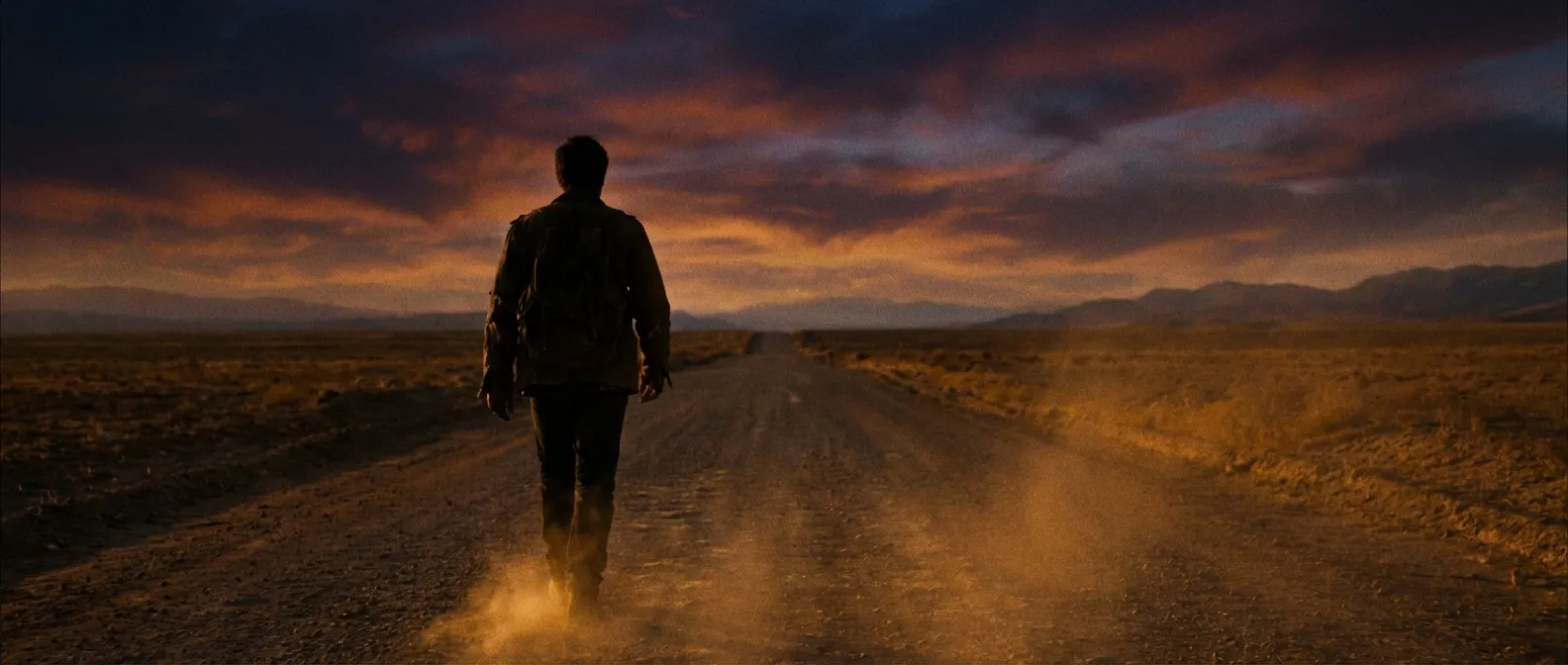
I’m not going to try to talk you out of whatever you’re feeling right now.
If you picked up this article expecting a defense of Christianity aimed at hauling you back into the fold — close it. That’s not what this is. There are plenty of those out there, and if you’ve been through the kind of pain that makes someone walk away from faith, the last thing you need is another person who doesn’t actually listen before they start arguing.
So let’s start here: if you’re leaving, or if you’ve already left, I’m not going to pretend I know your story. I don’t. But I want to sit with you in it for a few minutes, if you’ll let me.
What Actually Happened?
When people say “I used to believe, but…” the thing that comes after “but” is almost never one thing. It’s usually a tangled mess of experiences, questions, and breaking points that accumulated over time. But there are patterns.
Church hurt. Someone who was supposed to represent God betrayed your trust. A pastor was abusive. A community that preached love practiced exclusion. You watched leadership cover up something terrible, and then tell you to pray about your “spirit of division” when you asked questions. You didn’t leave God — you left a building full of people who used God’s name to control you.
Intellectual doubts. You went to college, or you read a book, or you just started thinking more carefully, and the easy answers you grew up with fell apart. Nobody in your church could engage with your questions — they just looked nervous and told you to have more faith. Eventually “have more faith” started sounding like “stop thinking.”
Moral objections. You read the Old Testament closely and found things that horrified you. Genocide commanded by God. Slavery regulated rather than condemned. Eternal conscious torment for people who happened to be born in the wrong place and time. And you thought: I can’t worship a God like that. A god who does those things is worse than no god at all.
Unanswered prayer. You prayed. You prayed desperately, with everything you had, for something that mattered more than your own life. And nothing happened. Or worse — the thing you feared most happened anyway. And all the theology about “God’s plan” and “everything happens for a reason” felt like salt in an open wound.
Tragedy. Someone died. Something broke. The world showed you a face so cruel and random that the idea of a loving, sovereign God became not just doubtful but obscene.
If any of that resonates, I want you to hear this clearly: your pain is real, your questions are legitimate, and you are not broken for feeling this way.
What I’m Not Going to Do
I’m not going to tell you that you never really believed. That’s a cruel thing to say to someone, and it’s almost always wrong.
I’m not going to tell you that doubt is a sin. It’s not. It’s what happens when honest people encounter hard things.
I’m not going to quote Romans 8:28 at you and tell you it’ll all make sense someday. Maybe it will. Maybe it won’t. Either way, that’s not what you need to hear right now.
And I’m definitely not going to tell you that you should just go back to church. Maybe you should. Maybe you absolutely should not — at least not right now, and definitely not to the same one.
Some Distinctions That Might Matter
Here’s what I will say, gently: not all departures from faith are the same thing, even though they can feel the same from the inside.
Leaving a bad church is not leaving God. If your experience of Christianity was shaped by toxic leadership, manipulation, prosperity gospel nonsense, or a community that valued conformity over honesty — leaving that isn’t losing your faith. It might be saving it. The building is not God. The pastor is not God. The culture is not God.
Outgrowing a shallow faith is not losing faith. If the version of Christianity you were handed as a child can’t hold the weight of adult questions, that’s not because Christianity is false. It might mean you were given a children’s version and never offered the adult one. There are 2,000 years of Christian intellectual tradition — philosophy, theology, mysticism, social justice — that most churches never touch. You may have outgrown your understanding of God without outgrowing God.
Deconstructing is not the same as demolishing. Deconstruction, at its best, is pulling apart what you believe to see what’s actually solid and what was just cultural wallpaper. That’s not faithlessness — that’s the most honest thing a person can do. The question is what you find when you get to the foundation.
People Who’ve Been Here
You’re not the first person to walk this road.
C.S. Lewis was a committed atheist for years. He didn’t lose a childish faith — he was a brilliant Oxford scholar who thought Christianity was mythology. He came back, but not easily, and not quickly. He called himself “the most dejected and reluctant convert in all England.” His faith on the other side was deeper and more honest precisely because he’d torn it apart first. And then, years later, when his wife Joy died of cancer, he wrote A Grief Observed — a book so raw and angry that some Christians tried to get it pulled from shelves. The man who wrote the most famous Christian apologetics of the 20th century also wrote: “Go to Him when your need is desperate, when all other help is vain, and what do you find? A door slammed in your face.”
Mother Teresa spent decades in what she called “the darkness” — a profound sense of God’s absence that terrified her. She kept serving. She kept praying. But her private letters, published after her death, revealed a woman who knew the silence of God as intimately as anyone alive.
Frederick Buechner wrote: “Doubts are the ants in the pants of faith. They keep it alive and moving.” He spent his career in the space between belief and unbelief, and his writing is more honest and more beautiful for it.
The Psalms — roughly a third of them — are laments. Angry, confused, desperate cries from people who believe in God and are furious with Him. The Bible itself makes space for this.
For the Chief Musician; set to “The Doe of the Morning.” A Psalm by David. My God, my God, why have you forsaken me? Why are you so far from helping me, and from the words of my groaning?
Jesus quoted those words on the cross. If the Son of God can cry out “Why have you forsaken me?” then your doubts are not disqualifying. They’re in good company.
What If Doubt Isn’t the Enemy?
Here’s a question I want to leave you with — not as an argument, but as a possibility.
What if doubt isn’t the opposite of faith? What if it’s part of it?
Think about it this way: you can’t doubt something you don’t care about. Doubt is what happens when something matters so much that you can’t just accept easy answers anymore. Indifference doesn’t ask hard questions. Doubt does.
Immediately the father of the child cried out with tears, “I believe. Help my unbelief!”
“I believe; help my unbelief.” That’s one of the most honest prayers in the Bible. It’s a man saying to Jesus: I want to trust you, but I’m struggling. I’m here, but I’m barely holding on.
And Jesus didn’t rebuke him. He didn’t say “come back when your faith is stronger.” He helped the man’s son.
The Bible is far more comfortable with doubt than most churches are.
On some have compassion, making a distinction,
“Have mercy on those who doubt.” Not “argue with those who doubt.” Not “shame those who doubt.” Mercy.
What If You’re Not Walking Away — What If You’re Walking Through?
Some people who deconstruct come out the other side with no faith at all. I won’t pretend that doesn’t happen, and I won’t pretend those people are all angry or rebellious or deceived. Some of them are thoughtful, compassionate, honest people who looked at the evidence and landed somewhere else. I respect that, even as I disagree.
But many people who deconstruct find something unexpected on the other side: a faith that’s smaller, simpler, and stronger than what they had before. Stripped of the cultural baggage, the political entanglement, the easy answers, the performative certainty — what’s left is sometimes surprisingly durable.
Not a faith in a system. Not a faith in an institution. But a faith in a person — Jesus of Nazareth, who said and did things that don’t fit neatly into any box, who called out the religious establishment of his own day, who touched the people everyone else avoided, who died forgiving the people who killed him.
You might find that you’ve been deconstructing Christianity-as-culture, and that Jesus himself has been standing quietly to the side the whole time, waiting for you to finish.
Or you might not. I can’t promise you where you’ll land.
If You’re in the Middle of It
If you’re in the thick of deconstruction right now — where everything feels unstable and the ground keeps shifting — here’s what I’d offer:
Take your time. This isn’t a crisis to be solved by Friday. Give yourself permission to not know. Faith that’s rebuilt slowly is faith that lasts.
Find better conversation partners. If the only Christians you’ve talked to are defensive and afraid of your questions, you’ve been talking to the wrong Christians. There are brilliant, honest, open-hearted believers who will sit with you in the dark. Look for them.
Read widely. Not just the people who confirm what you already think — on either side. Read the skeptics fairly. Read the believers fairly. Read the people who don’t fit neatly into either category.
Distinguish between hurt and evidence. This isn’t to dismiss your hurt — it’s deadly real. But pain can make everything look dark, including things that are actually solid. Trauma warps perception. Healing sometimes clarifies thinking. Get help for the wound before you make permanent decisions about the worldview.
Stay honest. That’s it. Whatever you end up believing, let it be what you actually believe — not what you think you’re supposed to believe, and not what you’re believing reactively because you’re angry at what you used to believe.
A Word for Those Who Stay
If you’re a believer reading this, maybe thinking about someone you love who’s walking away — can I be direct with you?
Don’t panic. Don’t lecture. Don’t send them apologetics books they didn’t ask for. Don’t post passive-aggressive Bible verses on social media.
Love them. Listen to them. Let them be angry. Let them be sad. Let them be confused. Don’t treat their doubt as a project to be managed. Treat it as a person to be loved.
The best apologetic for Christianity has always been Christians who actually act like Jesus.
It is because of Yahweh’s loving kindnesses that we are not consumed, because his mercies don’t fail. They are new every morning. Great is your faithfulness.
The mercies are new every morning. Not just for the confident believers. For the doubters. For the wanderers. For everyone who’s whispering “I used to believe, but…”
The “but” doesn’t have to be the end of the sentence.
It might just be the middle.